Sunday, August 28, 2011
The Job of a CEO
Friday, August 26, 2011
What ails Infrastructure in India?
Wednesday, August 24, 2011
The trip
From the glaciers and muck of Rohtang Pass, on to the Ganja fields of Manali. Past countless landslides and raging rivers. Then past the grand old Grand Trunk road and on to the shiny facades and rotting roads of Gurgaon. Followed by a lunch by the Taj. The real one in Agra. Past the countless cows of Bundelkhand. Then a night dash across the Chambal valley - beautiful in the moonlight. Past broken Madhya Pradesh roads and past the dense forests of Central India. Past amused monkeys and Pench's Rudyard Kipling resort. Onto the home run - the under-construction expressways of Telangana. Himachal Pradesh to Hyderabad. 2200 km in 60 hours. One hell of a roadtrip.
Tuesday, August 23, 2011
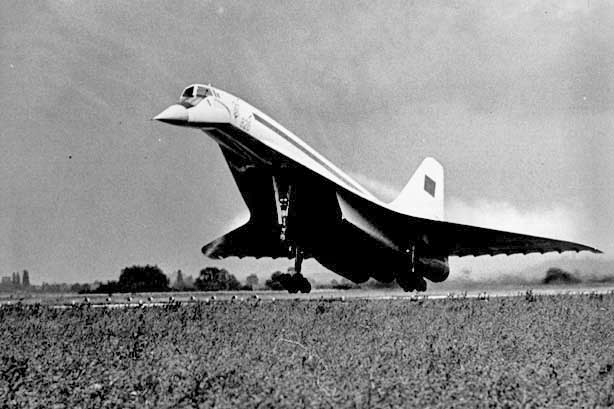
The Tu-144
Just came across the amazing story of the Tupolev Tu-144. One of the biggest engineering disasters I have read about!
Wednesday, August 10, 2011
Boredom and Creativity
Monday, August 8, 2011
Values, a luxury not a choice
A couple of weeks back I was trying to go home from work around 8pm and it was raining like crazy. It took me a whole hour to find a cabbie who would agree to take me home. I kid you not, a full 60 minutes – during which I walked all across Nariman Point and even reached Churchgate, fully drenched despite the umbrella. People who have lived in Mumbai can appreciate how hard it gets to find a cab when its raining. When I finally did find a cab, I promptly began venting about how Mumbai cabbies act like crooks when it comes to taking on passengers, especially when its raining (FYI, the law states that a cabbie cannot refuse a passenger irrespective of where he/she wants to go). I was righteously indignant, but he said something that shut me up. He said,
“Sir, rules are rules, but a man has to look out for himself. If I try to be a sincere guy and take you home to Wadala when its pelting, I will probably not find another customer there for hours. I still have to pay a flat Rs. 400 to my seth for a 12 hour shift because I don't own the car. But you will not pay me a paisa more than the meter fare, will you?”
“Or, fording through waterlogged roads, maybe my rundown old cab will break down. Will you walk away unconcerned, or will you try and help me get it repaired? Or do you think there is a government department or an insurance company who will help me out if my car breaks down in the rains?”
“On a more elementary level, every day of my life is spent trying to scrounge out as much money as possible. There is a wife and kids and parents and siblings all waiting back home for me to earn some money so that they can live. Sure I would like to be the ideal cabbie who is honest and upright and stands up to his customers – who wouldn’t – but do I have the luxury of putting values ahead of money? “
It was compelling logic. If you put values ahead of selfish gains, your kids wont be able to afford even a half-baked education back in the village. If you die or something unfortunate befalls you, no government will give a damn for your family. It’s a wild wild world, and each man has to look out for himself.
And that is a large part of the problem we face in countries like India. Too many people are running their lives six feet from the edge, desperately trying to make a life out of the deal fate has handed them. Can you or I afford to lecture them on values? Sure there is rapid economic growth. But that is far too often distorting the wealth equation than resolving socio-economic issues for the unfortunate millions. Having started from abject poverty, this country is rapidly morphing, and wealth is being created within the span of years, even months, instead of lifetimes. While millions watch from the sidelines, unable to participate. Those with half a chance – like the cabbies who rejected me – are racing as hard as they can trying to make ends meet. Perhaps the land of Gandhi does not have the luxury to value values in today’s circumstances.
Sure you might say everybody has a choice. And I am sure there are many in this great land who continue to uphold values above many other things in life. But I don't think you or I have the right to judge the rest very harshly.
PS: I have been thinking about Values a little bit lately. There are some interesting themes to cover in business values too. Will cover them soon.
Sunday, August 7, 2011
Letter from a Blackberry insider
Saturday, August 6, 2011
A trillion or two here and there...
Wednesday, July 27, 2011
Evangelism, and whats in a name
Tuesday, July 26, 2011
My thoughts take flight...


Sunday, July 10, 2011
Crowing away to glory
Sunday, June 26, 2011
Get out of my way!

Text below the comic: Now you won’t feel angry when the person behind you feels obliged to make you aware of the fact, that the light has turned green. This usually happens 534 microseconds after the change. Don’t feel rage. Feel sympathy for the guy.
Update: I have realized that for a peaceful, honk-free drive you do need a couple of factors to be in your favor. Most important being, you should not be getting late to reach someplace. Others may be person / situation specific?
Monday, June 6, 2011
Winged happiness
Monday, May 30, 2011
Black Irony
Wednesday, May 25, 2011
Zero is NOT equal to Zero
Friday, May 20, 2011
Dream On
Wednesday, May 4, 2011
U.N. Forecasts 10.1 Billion People by Century’s End
Saturday, April 30, 2011
Tuesday, March 29, 2011
The Tiger
The media is screaming out headlines to the effect the tiger population has increased by 20% over 4 years. And somewhere in the text the articles say ‘experts are questioning the conclusions’. Then the articles go on to mention that 288 of the 295 additional tigers accounted for, were actually counted in areas previously not included in the survey! Talk about the most misleading headline ever. Especially when you also read in the article that the tiger habitat has reduced from 93,600 to 72,800 sq.km in the same time.
Bravo. Disturbing news that the tiger has been pushed 20% closer to extinction has been repackaged to imply that the tiger is doing 20% better. Nincompoops.
All this talk of 1411 and 1706 also reminds me of Aircel’s outrageous campaign a while back: ‘Save our Tigers’. How in high heavens are everyday people expected to help in conservation of tigers?? The campaign helpfully mentions that one should blog about it and speak about it. As if the high decibel campaign wasn’t sufficient enough. Fact is, the Indian aam aadmi is not a threat to the tiger and increasing his awareness about the issue is not going to save the tiger. Such a campaign would be wonderful in China, that horrible land with an insatiable appetite for tiger parts. You could point out that increasing general awareness on conservation of the ecosystem is never bad. True. Just that this campaign reeked of sheer publicity and CSR hogging to me.
Note: Unlike the first half of this piece, the second half is written from the heart. So less robust an argument despite being more aggressive in tone.
Thursday, March 3, 2011
Thursday, February 10, 2011
Interesting letter by a CEO
We too, are standing on a "burning platform," and we must decide how we are going to change our behaviour.
Over the past few months, I've shared with you what I've heard from our shareholders, operators, developers, suppliers and from you. Today, I'm going to share what I've learned and what I have come to believe.
I have learned that we are standing on a burning platform.
And, we have more than one explosion - we have multiple points of scorching heat that are fuelling a blazing fire around us.
For example, there is intense heat coming from our competitors, more rapidly than we ever expected. Apple disrupted the market by redefining the smartphone and attracting developers to a closed, but very powerful ecosystem.
In 2008, Apple's market share in the $300+ price range was 25 percent; by 2010 it escalated to 61 percent. They are enjoying a tremendous growth trajectory with a 78 percent earnings growth year over year in Q4 2010. Apple demonstrated that if designed well, consumers would buy a high-priced phone with a great experience and developers would build applications. They changed the game, and today, Apple owns the high-end range.
And then, there is Android. In about two years, Android created a platform that attracts application developers, service providers and hardware manufacturers. Android came in at the high-end, they are now winning the mid-range, and quickly they are going downstream to phones under €100. Google has become a gravitational force, drawing much of the industry's innovation to its core.
Let's not forget about the low-end price range. In 2008, MediaTek supplied complete reference designs for phone chipsets, which enabled manufacturers in the Shenzhen region of China to produce phones at an unbelievable pace. By some accounts, this ecosystem now produces more than one third of the phones sold globally - taking share from us in emerging markets.
While competitors poured flames on our market share, what happened at Nokia? We fell behind, we missed big trends, and we lost time. At that time, we thought we were making the right decisions; but, with the benefit of hindsight, we now find ourselves years behind.
The first iPhone shipped in 2007, and we still don't have a product that is close to their experience. Android came on the scene just over 2 years ago, and this week they took our leadership position in smartphone volumes. Unbelievable.
We have some brilliant sources of innovation inside Nokia, but we are not bringing it to market fast enough. We thought MeeGo would be a platform for winning high-end smartphones. However, at this rate, by the end of 2011, we might have only one MeeGo product in the market.
At the midrange, we have Symbian. It has proven to be non-competitive in leading markets like North America. Additionally, Symbian is proving to be an increasingly difficult environment in which to develop to meet the continuously expanding consumer requirements, leading to slowness in product development and also creating a disadvantage when we seek to take advantage of new hardware platforms. As a result, if we continue like before, we will get further and further behind, while our competitors advance further and further ahead.
At the lower-end price range, Chinese OEMs are cranking out a device much faster than, as one Nokia employee said only partially in jest, "the time that it takes us to polish a PowerPoint presentation." They are fast, they are cheap, and they are challenging us.
And the truly perplexing aspect is that we're not even fighting with the right weapons. We are still too often trying to approach each price range on a device-to-device basis.
The battle of devices has now become a war of ecosystems, where ecosystems include not only the hardware and software of the device, but developers, applications, ecommerce, advertising, search, social applications, location-based services, unified communications and many other things. Our competitors aren't taking our market share with devices; they are taking our market share with an entire ecosystem. This means we're going to have to decide how we either build, catalyse or join an ecosystem.
This is one of the decisions we need to make. In the meantime, we've lost market share, we've lost mind share and we've lost time.
On Tuesday, Standard & Poor's informed that they will put our A long term and A-1 short term ratings on negative credit watch. This is a similar rating action to the one that Moody's took last week. Basically it means that during the next few weeks they will make an analysis of Nokia, and decide on a possible credit rating downgrade. Why are these credit agencies contemplating these changes? Because they are concerned about our competitiveness.
Consumer preference for Nokia declined worldwide. In the UK, our brand preference has slipped to 20 percent, which is 8 percent lower than last year. That means only 1 out of 5 people in the UK prefer Nokia to other brands. It's also down in the other markets, which are traditionally our strongholds: Russia, Germany, Indonesia, UAE, and on and on and on.
How did we get to this point? Why did we fall behind when the world around us evolved?
This is what I have been trying to understand. I believe at least some of it has been due to our attitude inside Nokia. We poured gasoline on our own burning platform. I believe we have lacked accountability and leadership to align and direct the company through these disruptive times. We had a series of misses. We haven't been delivering innovation fast enough. We're not collaborating internally.
Nokia, our platform is burning.
We are working on a path forward -- a path to rebuild our market leadership. When we share the new strategy on February 11, it will be a huge effort to transform our company. But, I believe that together, we can face the challenges ahead of us. Together, we can choose to define our future.
The burning platform, upon which the man found himself, caused the man to shift his behaviour, and take a bold and brave step into an uncertain future. He was able to tell his story. Now, we have a great opportunity to do the same.
Stephen
Wednesday, February 2, 2011
Population
Wednesday, January 26, 2011
Impunity of the powerful
Wednesday, December 1, 2010
And now, a fun link!
Monday, November 29, 2010
Wikileaks and other entertainment
Friday, November 26, 2010
Deterrence
Monday, November 22, 2010
On Free Markets
For the uninitiated, and those too lazy to read the above link, ticket prices for sectors such as Mum-Del zoomed in the recent past. If you bought tickets for 3-4 days away, you would be fine, but within 1-2 days, prices really spiked - particularly noticeably on low cost carriers. Eg: Rs. 20-30,000 for a one way Mum-Del fare. So on for some other sectors as well. Mainly happened due to supply issues (esp. at Mumbai airport) and high demand due to seasonality.
The aviation ministry got really pissed off about the high fares, and gave earfuls to all airlines (now the situation is supposedly back in control - but read on to see why it is not). My question is: why should the civil aviation ministry care? Aviation is a private sector industry, not subsidized by the government in any way, and which caters to the elite. So why should the ministry care?
Now some may want to dispute the elite bit - using two broad arguments:
1. Air travel is increasingly a middle class affair, and should be encouraged
More than 70% * of our country lies below the middle class benchmark. I can somewhat understand the government being bothered about affordability of rail travel, but air travel? Are there no other means available to Mr.-Verma-clothes-shop-merchant if he is only getting Saturday's ticket to Delhi for 22,000 on Friday? Cant he take a train o
2. Air travel is also important for businesses etc
I have this feeling...call it hunch if you will...that businesses wont be impacted too much by fare spikes which are last-minute AND on weekends AND for low cost carriers. I mean, this is the segment which gave birth to the idea of an expensive business class with 3x-5x fares!
As it so turns out, there appears to be some indication of shady collusive behavior by airlines too, apart from supply-demand mismatches. And by god if that is true then it should be stopped by the regulators and ministers. But thats not the line I see the minister take - its just the same old "consumer-friendly" posturing... "We will not let them increase fares likes that" etc
For once I say, let the free market decide! The current spiky system was good - in the absence of sufficient supply, those who REALLY needed to fly could still get seats at a premium till the very end while others would drop out of their plans / take a train. Now, everyone sees low fares thanks to socialism, but those in urgent need at the last minute will never find those seats! Sigh. and interferes where it should not!
* Figures are for representational purpose only; quite unverified