Labels (choose what you want to read about)

Wednesday, January 30, 2019

How car designs have aged

I grew up a big car buff and though the interest has waned a little over the years, I still take a keen interest in cars. Car design (exterior) has been a particular area of interest — there was even once a time when I seriously wanted to be a car designer and even sketched some designs. Having never trained formally in drawing, and not having a good eye for perspective, those designs haven’t aged very well, but that’s beside the point. I was recently reminiscing about car designs that I loved growing up (some of which have aged rather poorly and others that have only become more amazing over time), so I put together this post to do a retrospective on some of the notable designs in my mind over the last 20 years. I think this is especially relevant given many recent design trends (overdesigned cars, anonymous ‘Russian doll’ designs, cheap attempts to buy ‘presence’ with out of proportion grills, or just plain ugly designs). Not to say we are going down a bad design era (Volvo for one continues to knock things out of the park), but always useful to go down memory lane, no? I have given a scoring based on my memory of how I felt about the design at the time, and how I feel about it now.
Caveats
  • Design is a highly subjective matter, so of course your mileage may vary
  • I imagine I have missed a fair number of cars to the vagaries of memory (and to my specific exposure) so this is a rather random collection
  • I worry that over time our exposure to cars on the roads in various levels of maintenance affects our views on the original design. So I tried to pull up brochure photos to try and show the designers’ original vision
  • I have kept aside supercars and the like. The joy of spotting and admiring beautiful design in everyday objects is something different compared to drooling over million dollar cars (my opinion). Then again, not all supercars have great design so I will leave others to pick that thread up
  • I only talk about design in a purely aesthetic sense here (design for the sake of design), keeping aside considerations like space / packaging, safety, etc.

So with all those disclaimers out of the way, here’s my list…
1998 Daewoo Matiz [Then: 9/10] [Now: 8/10]

I remember the first time I saw the Daewoo Matiz in a magazine pic of a pre-launch article. This was the late 90s and I was in absolute awe. The Indian car market was just opening up at the time and compared to what we had on our streets, the Matiz seemed like it had arrived from a completely different planet and era (dang I can’t find that original pic). The extreme cab-forward style, those perfectly geometrical headlamps, the cleanly proportioned body. It was like a new-age Beetle to my eyes. As fate would have it, the Hyundai Santro (aesthetics wise a relative ugly duckling next to the Matiz) won the market and the Matiz struggled for traction after a good first year or two. Over time the Matiz suffered on Indian roads with many ill-maintained examples being driven around or catching dust by the side (plus bad ‘facelifts’), and my fascination went down. But looking back at some original pics, you can see the design shining through. And evidently it was based off an Italdesign concept (read here)!
1998–2004 Honda City [Then: 10/10] [Now: 10/10]
These were amazing low-slung beauties. Clean lines but not at all boring. I loved both the pre-facelift and post-facelift models and still do. In my mind this was a great example of a facelift that moved the model into the future (jewel headlamps and tail lamps). And of course the overall package was amazing, not just the design.

4th gen BMW 3 Series and 5 Series [Then: 9/10] [Now: 11/10]
These cars used to set my heart racing back in the day and have become much-sought after collector’s cars now. Of course that has a lot to do with the engines, handling and all of that (a lot of people believe that BMW was at it’s prime in the 90s in the pre-electronics /mechanical era), but design has definitely played a role. Such well proportioned cars, clean lines, classic BMW angel eye headlights. Especially the E39 5 series has aged spectacularly. I am beginning to think of it as close to the league of the Jaguar E-type in terms of timeless design.
5 Series

3 Series
2003 Subaru Forester [Then: 9/10] [Now: 9/10]
I came across this beauty as the ‘Chevrolet Forester’ in India. Of course destined to fail as it didn’t have the presence or feel of an SUV. (Aside: did the Indian market change any bit in 15 years? The S-Cross still struggles with ‘presence’). But me, I just loved those proportions, that funky tailgate, that hybrid look of a station wagon-SUV. And maybe I have a thing for cars that look like Mark Wahlberg instead of John Cena (thinking of the CR-V and RAV4 progressions over years). The Forester has not beefed up too much in these 15 years, but it has indeed reached an awkward height visually, so lost a lot of the cool factor in my eyes, but Subaru’s Crosstrek has stepped in admirably.
2003 Porsche Cayenne [Then: 7/10] [Now: 9/10]
I think this will be a controversial one. No one seemed to like the first generation Cayenne. This beast of a design was not befitting a Porsche, they said. And Porsche has made subsequent generations less ‘in your face’ and more like a swoopy sports car but on stilts (which has made them lose character IMO — though the latest generation is getting a vibe of it’s own). Call me a hypocrite considering my views on the Forester / CR-V above, but I still love the butch first-gen and how it has aged. Maybe the design would have suited a Bentley more than a Porsche? Sure the front with the teary eyed headlamps was unfortunate like all Porsches of that era including the 911, but even that got fixed by a 2007 facelift.
Glorious First Gen


5th gen BMW 5 Series (2003) [Then: 9/10] [Now: 8/10]
I know everyone hated the Bangle designs, but I actually loved the 5 series of that era (though not the 6 or 7). Have mixed feelings about how this one has aged (brochures look great; on the road the cars look meh; side profile looks out of proportion now - especially the boot). I still rate it an 8 given how big a role ‘flame surfacing’ ended up playing in taking car design overall into the 2000s. Chris Bangle was definitely a visionary — but maybe BMW wasn’t the right brand for him?


2008 Mercedes-Benz GLK [Then: 5/10] [Now: 8.5/10]
This is an odd one. I hated the design at first — thought it was a poor translation of the boxy C/E design into an SUV. But over time it has grown on me massively. Unique design, sweet-spot size, shades of station-wagon / early Forester influence, stands out in a sea of anony-SUVs (including the successor GLC — swap out the badge on that one and no one can tell it apart from a Buick!). I think the GLK’s growing stature is just a darning reflection on the overall design evolution of this decade’s SUVs. The GLK is like the cool anti-establishment truck. Something a wealthier Walter White might drive!

4th generation Mercedes-Benz E class / 2013 facelift [Then: 6/10] [Now: 9/10]
I liked the 4th gen ‘W212’ E class but didn’t necessarily love it. And when the facelift came out, I was very annoyed that Mercedes-Benz had broken away from years of tradition and merged the dual headlamps into one. But I now eat humble pie. Perhaps it’s too early to tell, but I now think this entire generation is a classic. A unique low design, boxy yet sleek. I love both the pre-facelift Pontoon style rear fenders, and the post-facelift LED tail lamps. Compared to the 4th generation’s sharply individualistic design, I hate the latest E class anony-sedan design


Other notable mentions
2005 Fiat Punto aka Grande Punto (Giorgetto Giugiaro classic) and 2007 Fiat Bravo (Alfa Romeo masquerading as a Fiat?)

2003 Renault Espace (epitome of idiosyncratic French design that somehow just works). But maybe only on the outside. I know I am not supposed to review interiors, but what were they thinking with that dashboard?


Late 2000s Volvos (C30, S60, XC60, V60). Amazing designs that have aged decently if not spectacularly. Set the stage for the ‘Thor Hammer’ current gen rock stars


Friday, January 2, 2015

Capitalism lessons from Dallas Buyer's Club

I finally watched Dallas Buyer's Club yesterday - amazing movie and acting - definitely deserved its 3 Oscars and 6 nominations. But boy the movie also had a most interesting set of themes related to capitalism theories! Spoiler alert ahead.


The movie portrays real life hero Ron Woodroof (Matthew McConaughey's character) as a true blue Texan with a devil-may-care attitude towards rules. When Ron sees demand, he wants to create a market. Pure free market approach. And free markets worked so well in this case. In the infancy of the AIDS epidemic in the 1980s, when US regulators were moving far too slow in allowing effective new drugs to launch in the US, unauthorized buyer's markets created pockets of solutions by importing drugs and distributing them to dying patients. Supply finally met demand, bypassing market constraints, even if in a quasi-legal way. +1 for capitalism.

Funny thing is, in the same token the movie also dramatically portrays the perils of naked capitalism. The FDA clearly put the interest of big pharma companies ahead of public health - and dying patients. Its a typical case of legitimizing corporate profit seeking behavior through lobbying. Cue John Oliver's amazing humor on regulators' failing their roles, this time in the case of net neutrality. Non-video link here.

Getting back to Dallas, what can one say? Ironic moral of the story: Capitalism partially solved a problem that capitalism created!

Thursday, December 18, 2014

The grapes of drought

Visited California 2 weeks back. Huge drought all over the state apparently. Been going on for 4 years or so. Very likely caused by climate change. Agriculture affected severely, and the Golden State does produce half of the US' fruits and vegetables. Two major storms last week (biggest in 5 years) barely improved the situation as per scientists.


And yet. NO way of knowing there is a drought going on if you weren't told. Almost zero impact on residents' lifestyle. Sure, you are requested not to water your lawns in the interest of conserving water. But that's a cerebral request and a cerebral response by residents. No real pinch felt anywhere, for instance, through water rationing or occasional water cuts. Heck, water runs in all taps 24x7 in the Golden State even in the middle of this unprecedented drought.

Now, I am not complaining about this state of affairs. Far from it. In fact its heartening to know that despite such little impact on real lifestyles, people are driven to think about the drought and respect it. And California is definitely the most eco-conscious state in the country. But the tragedy is that many citizen of the first world, for all their well meaning intent, dont realize the true seriousness of some issues:

What does it mean to be bereft. What does it really mean to live with scarcity? How badly can Mother Earth hurt you if you don't care. 

If all a drought means is that you don't water your lawn (!), then you are obviously going to take time to get sensitized to reducing wastage in general. Forget general sensitivity, even specifically with regards to water, lower lawn watering aside, most places in CA didn't even bother with simple measures like water saving taps or 2-way control shower knobs (temperature + volume). And that is my gripe. This drought could have been a golden opportunity for nay-sayer Americans to experience firsthand the perils of ignoring climate change and favoring a devil-gives-a-damn lifestyle. But we probably remain a long way from giving up reckless insensitive things like gas guzzling V6 sedans and 18 foot long Chevrolet SUVs, non-stop air conditioner / heater usage, and ridiculously excessive use of plastic bags and paper napkins.

Disclaimer: All of my water-related lifestyle observations for Californians are based purely on personal experience at this point

Wednesday, November 5, 2014

SIAM is the state of the Indian auto industry

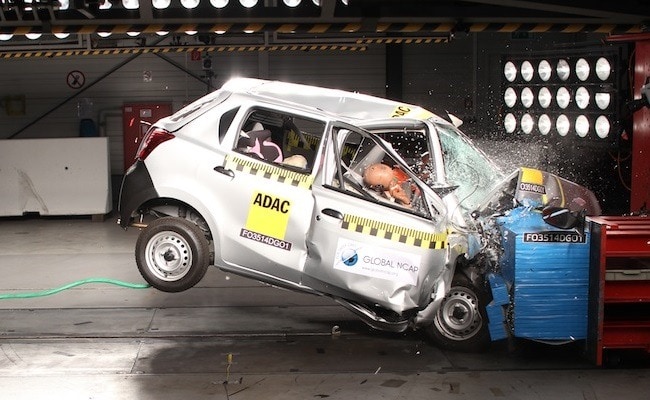
News is out that two more Indian hatchbacks failed the Global NCAP crash test recently. And not just failed, but failed miserably (0 stars out of 5). One of the two cars is India's 2nd largest selling car model (Maruti Suzuki Swift), and the other comes from multinational player Nissan (the Datsun Go), so its obviously damning news. This is on top of five other popular models that failed with 0 star ratings in January. But despite all this, look at the reaction that the director of the official industry body (SIAM) offers:

"It is just scaremongering" 
"Global NCAP can do what they want. We have our own safety road map that we are going to follow and are already following." 
"...the UK-based agency has not considered that average speeds in India are lower than in the developed world, due to poor road conditions and heavy traffic"** 

Now Maruti Swift & Datsun Go Fail NCAP Crash Tests

Links by Reuters and BBC here and here.

Does SIAM not know that India has the worst road safety record in the world? Granted, passenger car safety is just one part of the entire issue (poor road design and conditions, lax driver attitudes towards traffic rules, lack of respect for vulnerable users like pedestrians or scooterists, etc.). However, passenger car safety is actually the easiest one to fix. Just make airbags compulsory on all cars, or specify minimum structural rigidity for instance - these are not major changes. But this is not the first time that SIAM has tried to turn a blind eye to safety. In the past, the lobby group has actively tried to scuttle moves to improve safety norms or make airbags compulsory - simply because sales would dip somewhat. Agreed, many Indian customers are still cold to the idea of paying for safety, but that's changing rapidly, and anyway the role of the industry body must be to catalyze movement towards a better world, not act as a barrier. Just wish they would get rid of their naked-capitalist mentality and start thinking of total societal good.

By the way, hats off to Honda and a few other OEMs who stay well ahead of SIAM's current (antiquated) safety norms and actually offer Indian customers the same car safety as customers in the rest of the world.

**The tests were done at 64kmph. Now that's a pretty reasonable impact speed for Indian standards. Cars now typically do 80-100kmph on Indian highways, so a collision impact speed of 64kmph would probably be fairly common, especially in head-on incidents. And the point about heavy traffic is almost a joke. Traffic and low speeds is a reality in urban India, not on highways or expressways like the one below (this is increasingly the design spec for India's national highways, which carry 40% of India's people and goods). 

Wednesday, October 22, 2014

Sticking my neck out for a great go-to-market strategy

BharatBenz is the Indian arm of Daimler commercial vehicles, launched in 2012. I have been supremely bullish on their prospects right since I first heard of them in 2011. Here are a couple of links: Link 1Link 2. After some initial stress, they seem to be doing really well now.


In my opinion, Daimler's approach captures nearly everything that a multinational must do when entering a large new market like India:

1) Emphasizing the core offering. Daimler has launched trucks which are a perfect blend - global products that are appropriately engineered for India. These products hit close to international standards, but are not over-engineered either and are actually 'just right' for emerging markets like India. So pricing is not absurd, and the offer actually appears to hit a sweet spot on the performance-price frontier (~10-20% price premium). Further, the trucks are also fairly customized for India. For instance, there is a laser-like focus on fuel efficiency, which is Indian customers' priority #1. Through all the de-specing and customization, these trucks still are an order of magnitude ahead of conventional Indian trucks when it comes to quality and engineering, so that way Daimler has stayed true to its core competence.

2) Building up distribution muscle. Large, complex markets like India require multinationals to penetrate deep via distribution if they are to get out of the fringes and become major players. Daimler has partnered with experienced retailers in all the major trucking hubs of the country. There is still some way to go on distribution, but for a new entrant, they have done a great job on the distribution front.

3) Appropriate investments, management bandwidth, patience. All of the above requires hefty investments, as opposed to a low-cost replicate model that may be relevant to smaller countries. Daimler has made some pretty significant investments into a new R&D center which engineered trucks for India. Maximizing fuel efficiency required months and months of fine-tuning. They spent a lot on a factory in India as well, as on building up the distribution network. And on the management front, Daimler seems to have made BharatBenz a priority at the highest levels, thus guaranteeing high leadership attention. Finally, there is the acknowledgement that a market like India is not a short term play, but is actually a measured bet on long term success in what will become a major future market. Damiler has also astutely planned for the India investment to also reap dividends in emerging markets across the world - BharatBenz trucks will be exported to key EMs including South East Asia and Africa.


These are just a few of the many things Daimler seems to be doing right. The market is pretty strained though (overall CV sales were down ~30% last year), and truckers are taking time to warm up to BharatBenz. Of course they might have also got one or two things wrong during the launch, but overall, they are already #3 in market position, which is amazing (within a year of launch they have leapfrogged players like Volvo and Navistar). The big two are really far away though (Tata and Ashok Leyland together command ~75-80% market share, with Daimler bringing up #3 at ~5%!).

In all, I believe BharatBenz has got a great go-to-market strategy. Let me go out on a limb here and proclaim that they will be a big success in the next few years.

Friday, August 29, 2014

Eating cheetahs

Sailfish. Faster than cheetahs, predators just like cheetahs. Apex predators both. Yet cheetah killing is obnoxious, but sailfish are casually slaughtered and eaten (euphemism: they are 'fished'). No guilt. When will we stop treating ocean dwellers like food, and instead start protecting them? When will a tuna burger be frowned upon the way we frown upon a lion meat burger?


Here is a compelling way of looking at it (Sea Shepherd Conservation Society):

A boat full of dead pandas is alarming right, but we turn a blind eye to a boat full of dead tuna.

Sunday, August 3, 2014

Hello Moto

Just read that Motorola has jumped ahead of Nokia in the Indian handset market. Link here. That is just mind blowing at so many levels.

1) Motorola has achieved #4 in the massive Indian market (by volume), just on the basis of 3 models...2 if you count out the expensive Moto X
2) Motorola did this within a year of re-entering the market. Holy cow! How did they manage the sales & distribution? I know a lot of sales would have come through Flipkart and other e-commerce partners, but worth figuring out how they nailed the physical distribution bit (if they had any offline sales at all)
3) So online channels for handsets have become so significant? Wow
4) Typical price points for large-volume handsets have moved north of Rs. 10,000? (~$200). That's a 100% jump from just a couple of years back
5) How low has Nokia fallen. I mean, they were struggling with smartphones, but couldn't they have at least nailed the low-end of emerging markets with Asha and other models? Just goes on to show how terrible their strategy was to not launch in Android
6) Indian customers were so quickly willing to let go of all their baggage with regards to the Motorola brand. I remember a time when Motorola was seen as a dog brand...didn't matter if they came up with a few good models, their negative brand value hurt them so bad (like Fiat or Chevrolet in the Indian car market right now). Boy has Motorola moved on from those times!

Quite something.

Thursday, July 24, 2014

Offshoring vs Reshoring

There was an interesting article last month in Forbes about how manufacturing costs are really rather irrelevant for niche products. Link here. Makes a lot of sense.

And now we have another interesting case about a similar theme. It's Harley Davidson this time. Link here.

Its good that we have swung back from the extreme. Hope the bandwagon doesn't go the other way now. We already saw Google / Motorola try domestic manufacturing with some of their electronics (Moto X, Nexus Q)...didn't really work it looks like.

Monday, June 16, 2014

Animals and children

The other day I read 'The Crows of Pearblossom', a children's book by Aldous Huxley [minor spoiler alert]. I was curious to read it because of the author, whose dystopian novel 'Brave New World' I really liked. Apparently Huxley wrote this story for his niece, who was 5 or so at the time. Its a pretty nice story with many delightful instances of the protagonists having human characteristics (anthropomorphism). However, it was also a sadly typical tale where a carnivore (a snake in this case) is shown as evil.


That got me thinking, how important it is to sympathetically portray carnivores in children's books/movies. We are all intuitively driven to like 'cute', harmless creatures like rabbits or cows, and its also easy to show them as nice characters / heroes in our stories. Carnivores by dint of their diet, often end up playing the role of villains. They loom over the heroes of the tale, promising death or danger. Their personality then is also logically shown as dark or even outright evil. Isn't it ironic, given we ourselves as humans are biologically omnivores (I know many of my friends could possibly be categorized as pure carnivores given their dietary choices!).

The point is, though its easy as a narrator to show carnivores as the villains, are we not obliged to show them in a neutral / positive manner? Are we not creating an unhealthy fear / dislike for carnivores in our children by painting them black in otherwise shiny white tales? Think about it: children should be taught to be careful around carnivores like snakes, but why should they all consistently dislike snakes but adore say, sparrows?

Humanity has struggled with letting carnivores be in peace for a long time. Its almost as if we psychologically like to destroy other predators (especially apex predators like the big cats, wolves, or large birds of prey like eagles). Part of it is safety, but a lot of it is also just some primeval form of one-manship. Just look at all those photos of kings triumphantly posing with dead tigers. Given our own issues, isn't it time we stopped loading our children with emotional baggage about the supposed wickedness of carnivores?

Disclaimer: I am not saying we deliberately mis-portray carnivores in children's tales, just that we often take the easy route out when sketching animal characters, which ends up priming our kids poorly. Huxley himself idly made up this story for his niece one afternoon, which is quite fine for a one-off. Dreamworks' Madagascar is a good example where the storytellers explicitly played with the dynamic tension of having a mixed set of carnivores and herbivores in the lead cast (scene where Alex the lion starts to crave his friend Marty the zebra as a juicy steak). 

Friday, October 18, 2013

Flyovers of fancy

I have been meaning to write about 'class-ism' in Indian urban planning for a while now. In a nutshell, this is how it works: We deliberately invest a lot more into private transport - which supposedly* favors the elite - and willfully under-invest in public transport.

I first noticed this when all these flyovers started popping up in our cities about 10-15 years back. It was a step in the right direction, sure. I mean, our cities are tearing apart so bad that any transport infrastructure is well received. However, the tragedy was that for a full decade or so after we entered the flyover boom, everyone only focused on the flyovers. No one really cared about public transport systems like metro rails or BRTS. Thankfully that's changing a bit now, with metros coming up in about a dozen cities, and several tier 2 cities experimenting with the BRTS. And yet the tragedies remain - of an elitist mindset which mindlessly favors private car users. Some examples below.

1. JJ Flyover in Mumbai is off-limits for motorbikes. The JJ Flyover is a 3 km long elevated road which avoids congested parts of South Bombay and saves 15 minutes of travelling time at least. Bikes were banned on it a couple of years back, ostensibly to prevent biker deaths arising from speeding. Really? Can't we just have better speedbreakers on the sharp turns? The real reason seems to be that (we) car guys want to cruise down that nice stretch of road without having to deal with buzzy bikers.


2. Mumbai's new Eastern Freeway is off-limits for truckers. This new 11 km long entirely elevated road provides an alternate exit point from the city's commercial center in the south, to the mainland in the north. Thing is, one of India's largest ports, Mumbai Port, is also in the Southern part of the island city. As of now, truckers exiting the port have to crawl right across the city to reach their destinations. The freeway would have been ideal for truckers to get a quick exit because of its proximity to the port. Heck, most of the freeway was actually built on port trust land. See map below. The dark yellow line going all the way north is the new freeway. Bang next to the entry point is the port (red area in the South). And yet the freeway was only designed for cars.


3. Most Kolkata roads are now off-limits for cyclists. 
While most cities in the world are encouraging cycling, the Bengal government is doing its best to keep "them annoying cyclists" off the roads! Couple of links here and here.

These are just a few examples of our faulty mindset. The hoopla over the Bandra-Worli Sealink in Mumbai also comes to mind. Did you know that traffic on this bridge has actually fallen in the last 4 years? This Mumbai Boss article also talks about the Sea Link and some of the megalomania / elitism that ails our urban planning. When will we realize that encouraging private car usage on constrained roads will only lead to disaster for our cities? I have some thoughts on what is wrong with Mumbai's local train network, and how it could be improved a lot with a little effort. Will try to write on that shortly.

Friday, September 27, 2013

Of Droughts And Men

Revisited Steinbeck's Grapes of Wrath after a while. Epic as ever. However my thinking has changed in the intervening years, and in some aspects I don't quite agree with Steinbeck anymore.

The machines are shown to be heartless while the farmers are connected with the land. He who tills the land with his blood and sweat is the rightful owner of the land - not some large corporation. Steinbeck pretty much proposes that we stop the march of modernization. Go against the natural scheme of things in a way.

However, the Dust Bowl of the 1920s was a human tragedy caused by overpopulation.The implications on human life were tragic, but fact remains that we ended up over populating an area which couldn't sustain the human density. Natural balance had to occur. Maybe I appear radical because most droughts or famines could then be explained away as 'natural corrections'. What about the eyes of helplessness, the starving children, etc? As an answer, I think we just need to expand our lens a bit.

We as a species have taken over forests and converted them into farmlands. Sent several species into extinction in the process. There could have been a similar impassioned appeal by nature against man. But the fact is, it was in the natural course of things. About 20,000 years ago, we became at last the one species in the history of the earth which could control master our environment. And in the race of life (survival of the fittest), we did what we had to do - took as much control of our environment as possible. In the process, if we over-stretch ourselves at some places, we just need to realize the implications.

Grasslands are by definition areas where denser vegetation is unable to survive (due to difficult climate). Instead, they sustain a delicate ecosystem comprising grasses, birds, small rodents, etc. However we humans have time and again converted grasslands into farms. The result? These farms may run fine for 10 or 20 years, and then boom, one day nature catches up via a large drought. Steinbeck himself talks about this sequence of events (rampant agricultural-ization of Oklahoma wildlands) as the precursor to the dustbowl events of the 1920s. So when the drought did hit, population was bound to rebalance. Then why blame the machines?

I believe that the same issue holds true for semi-arid areas of the Indian subcontinent. Parts of Vidarbha, Telangana, perhaps Orissa...they probably can't sustain the level of farming we have today (where every square inch of non-hilly terrain is under farms). Absolute recipe for disaster. Agricultural advances in the 60s (Green Revolution) mean that at least the farmers in these regions wont die for lack of food, but it becomes difficult for them to sustain anything but the most basic, haphazard lives. Perhaps that is the reason why tragic farmer suicides are so common here. But while this human tragedy has been unfolding over the last few decades, an equally tragic consequence has been the extermination of grassland species. The Great Indian Bustard is of course the poster-boy of grassland species. Nearly extinct. So too are dozens of other, smaller species. How is one to say which is the greater tragedy?

Thursday, September 5, 2013

The Shangri La Vanishes

Opened the HT this morning and saw an ad for some new 'Palladium Hotel' in Mumbai. A closer look revealed that this is the erstwhile Shangri La hotel! Gosh that was quick! The place opened 9 months ago and is already in trouble. A quick google search confirms it - the asset owner (Phoenix mills) and the operator have 'mutually agreed to part ways'.
http://www.dnaindia.com/money/1880481/report-shangri-la-phoenix-scrap-management-deal

I was always suspicious of the uber-luxury hotel's location, and will stick my neck out and say location would have played a big role in the hotel's failure. Nothing against Lower Parel - I mean, 4 Seasons is doing fine there - but the exact location of this high-end hotel was pathetic if you ask me. Bang next to a crowded mall (the most crowded in Mumbai I would think), with insane traffic in the few hundred meters leading up to the hotel. Which hotel guest would like to see the hotel in front of their eyes and still spend 30 mins in the car waiting for traffic to open up? Actually the entire Lower Parel area has terrible traffic problems, and the 4 Seasons is probably safe because its location is more Worli than Lower Parel.

The news article says the asset owner was in talks with another operator, but looks like they have had to go solo on this one. I think its a terrible turn of events for them. Without the backing of a global hotel chain, it will be oh-so-difficult to get guests to even know about the existence of this 'Palladium hotel', forget choosing it. And Phoenix is kind of stuck with the high-end positioning at least for a few years because of the amounts they have invested on the rooms. Lets see how they wriggle out of this one. The ad did give me an idea - they are strongly focusing on the restaurants and wedding banquet facilities than on the rooms. Well best of luck to them!

Tuesday, April 16, 2013

UPA, stop throttling the private sector please

GM, Suzuki, Honda, Ford, Daimler under I-T lens for allegedly selling cars at a loss

Ridiculous stuff. Kill the golden goose already. This government is so concerned about its deficit that Vodafone alone couldn't satiate its hunger, now its also harassing loss-making auto MNCs!

Instead, why don't they stop blowing up money on that ever-consuming sink called Air India? Rs. 30,000 Crores we blew up on it last year. And of course all the myriad subsidies. God save this country from the populist Congress party.

Its like borrowing money off a credit card to go donate to charity - forever.

PS: Just saw this article on the 'greedy' taxmen
How can we get investor confidence back if taxmen treat businesses as per se shady?

Tuesday, January 22, 2013

All because we don't connect with fish...


The Bluefin Tuna. As numerous once as the American bison. As majestic as the bison. Today it faces the same fate as the bison - complete annihilation. Time article here. Below is a para from an old but eye-opening NatGeo feature on Bluefin:
Do we countenance such loss because fish live in a world we cannot see? Would it be different if, as one conservationist fantasized, the fish wailed as we lifted them out of the water in nets? If the giant bluefin lived on land, its size, speed, and epic migrations would ensure its legendary status, with tourists flocking to photograph it in national parks. But because it lives in the sea, its majesty—comparable to that of a lion—lies largely beyond comprehension.

And another excellent portion...
...all agree that the fundamental reform that must precede all others is not a change in regulations but a change in people's minds. The world must begin viewing the creatures that inhabit the sea much as it looks at wildlife on land. Only when fish are seen as wild things deserving of protection, only when the Mediterranean bluefin is thought to be as magnificent as the Alaska grizzly or the African leopard, will depletion of the world's oceans come to an end.
But you know, the rot is deeper. Man will not rest till he exploits and ruins every single natural resource at his disposal. The Anthropocene (Age of Man) is truly here, and we have already permanently disfigured a great planet in an unprecedented fashion. Decimated its biodiversity. Read more about our age here:

Tuesday, December 11, 2012

'My main brand is better. Always. Period.'

I came across a couple of news articles recently which talk of how MNCs in India are trying to 'adjust' the relative strength of their portfolio brands to mirror their global situation. What that means is that globally Brand A might be stronger than Brand B, and if the case is reversed in India, the corporate honchos will do all they can to make Brand B weaker than A.

The first example is Coca Cola India, which is (as usual) trying to push brand Coca Cola ahead of its brother brand Thums Up. Link here. The other example is of Volkswagen trying its best to prove to Indian customers that the VW brand is actually superior to Skoda. Link here.


Neither company is trying this for the first time. Coke has been attempting fratricide on Thums Up for over a decade now, and VW has been after subsidiary Skoda's brand equity since they entered India in 2007. Both have failed spectacularly - and yet they continue their efforts. Why?

The articles highlight some of the management thinking that goes behind such decisions: "We need our brands to be consistently positioned across the globe", "We want to offer our consumers the same experience world over", so on and so forth.

Maybe I don't understand long term multinational branding strategy too well, but it looks like these companies are actually going away from what customers are telling them about their brands. The current strategy of keeping Coke prices lower than Thums Up prices is still ok - at least it isn't actively hurting Thums Up. But Coke did exactly that a few years back when it famously stopped ALL marketing support for Thums Up while egging the Coke brand on. As a customer did you or I care? We still drank Thums Up by the droves and kept it a clear No. 1 in India. Today thankfully Coke gives brand Thums Up good marketing support, though the itch is always there to support brand Coke more (from the article: "...Vision 20:20 as it's called internally, most critical markets have been asked to show volume growth for the flagship brand")

The VW-Skoda story may not have such a reasonably happy ending though. Skoda entered India early (in 2001, vs 2007 for VW), and has built some tremendous brand equity here over the last decade. VW is forcibly trying to put Skoda 'in its place' - as a 'budget brand' below brand VW. Therefore all Skodas are now ~5-10% cheaper than VWs. There are two things to consider here.

One, the Indian customer's love and respect for brand Skoda is driven by the core product offering - the Octavia, Laura, and Superb have all been massive hits here. And all play in the 'premium' space, so lower pricing may not matter for customers. They may simply see Skoda as an even better deal - strong brand with great pricing.

But two, there are fears Skoda quality may go down to ensure the lower price points can be met. Now that would be a tragedy. And an ironic one at that. Skoda is a brand on the move, shedding its legacy quality issues in Europe and become a truly strong player. If these same legacy issues cause it to forever remain an underling brand to VW (with poor quality at that), then we would have come a full circle!


Monday, May 14, 2012

Newspapers in the news

GigaOM has an interesting article on how paywalls are a terrible idea for newspapers. The debate has been raging for years of course, and I have written in the past how solutions like DoubleRecall could help avoid paywalls. Mathew too says newspapers should look beyond the oh-so-obvious paywalls to create revenues:


To me, it makes more sense to try and figure out how to take advantage of the Web in order to provide something that the current market is likely to value, instead of focusing on how to squeeze as much as possible out of a declining market. 
However, how many newspapers have ever managed to 'creatively' monetize a website in a sustainable, ongoing fashion, without resorting to paywalls? In a sense, paywalls are the newspaper guys' answer to the book publisher guys' $10 ebooks. Sure there is no variable cost of selling each additional ebook, but you still have to charge folks per ebook to keep business running. Of course the fundamentally low cost of ebooks will probably shake up the publisher industry's high overhead costs in the long run, and reshape publishers if not destroy them completely in the long run.

However the newspaper industry has a far worse problem. While book publishers undertake the real job of hand-holding authors, helping them publish, and promoting their books (basically they do some value addition), most newspapers are just news aggregators (thanks GigaOM for the thought). And I think thats a key funda, one which may point to the long term future of newspapers, beyond just the current paywall debate.

So your newspaper basically picks up articles from agencies like AFP and Reuters, adds a few local (city/state/country) articles from a few journos on their payroll, prints them on a sheet of paper, adds a ton of advertisements, and delivers them to you in the morning. For this task their costs include

a) Payments to the agencies like Reuters
b) Printing costs
c) Salaries to journos / editors directly on their payroll (and hence not part of item 'a')
d) Overheads, overheads, and more overheads (advertising sales teams, subscription sales teams, printing staff, middle managers, regional managers, HR, Finance, etc. etc.)

Now these paper guys are having to compete with Google News, Yahoo News, Huffington Post, and a ton of other online aggregators, whose costs are only 'a', and in some cases, 'c'. Paywalls or not, how the hell are they going to compete with leaner online news aggregators whose only handicap is lack of journos / editors covering local news? If I may do some crystal gazing...

In some time agencies like Reuters and AFP will also add journos / editors covering local news onto their own payrolls. Or maybe new agencies will get created specifically for local news. But once that last bastion of newspapers is breached, there will be a big shakeout in the industry. Most smaller newspapers (who have little original content) will get wiped out. Larger ones like NYT may survive for a while. Meantime, the online guys get better and better at understanding your news needs (they are already much better at it than your print guys, who force feed random stuff down your throats all the time!). And as the final nail, some online aggregator will probably start offering a reverse newspaper down the line for the remaining paper format addicts. Imagine a Google News offering low-overhead printout and delivery (locality-level) of a Google newspaper in your exact preferred layout, but in paper format. Don't you think that might mean curtains down for conventional newspapers?

Thursday, April 5, 2012

Take it, Tenez!

Nadal quits ATP role as Federer stands firm

Nadal and Federer have time and again sparred off the tennis courts too - in the ATP players council. The boiling issue has been whether players should be ranked basis their performance over the past 1 year (current scheme), or the past 2 years (proposed). For a change I have been rooting for the Federer camp. You see, I agree with Nadal's concern that the tour is too taxing on players as they have to trot around the world to a new tournament every 2-3 weeks just to maintain their ATP points. But while 2 year based rankings may improve the fatigue situation, they will simply not reflect real form and competitiveness of players. For example, ESPN analysis towards end of 2011 shows that, even after one of the best seasons ever, Djokovic would still have been No. 2 behind Nadal had there been a 2 year ranking! I say player fatigue and resultant injuries is a very pressing issue, but can't there be other ways to address it? Reducing number of tournaments is an easy yet difficult-to-implement one, so maybe they should increase the profile (and awarded points) of mid-rung tournaments. That way top players will know they can get better returns on their efforts by choosing all Grand Slams, a few mid-rung events, and only a few lower rung affairs. Others can choose a more grueling mix if they please, with only limited chance to leapfrog higher ranked players purely on the basis of higher appearances.

But wait, isn't that what the ATP is already doing with its ATP Masters series of titles? :)


PS: All this reminds me of the ICC cricket rankings. I was wondering why India did not become No. 1 in ODI rankings even after lifting the World Cup in 2011. The team has of course gone into spectacularly decline since. Did the Reliance ODI Ranking predictor know something we didn't?

PPS: The title of the post 'Tenez', points to the origin of the sport's name. From Wikipedia: "It was not until the 16th century that rackets came into use, and the game began to be called "tennis", from the Old French term Tenez, which can be translated as "hold!", "receive!" or "take!". An interjection used as a call from the server to his opponent."

Wednesday, April 4, 2012

Are you sure you are more intelligent than a dolphin?

Dolphins deserve same rights as humans, say scientists
Do read the above BBC article if you want to alter your perspective even slightly.

The great tragedy of our times is that, while we have (after centuries of slavery) accorded all human beings equal rights ('human' rights), we are not able to protect even the most bare basic of animal rights (the right to survival). Many animal species are emotionally complex and extremely intelligent. Its just that we humans, in our minuscule understanding of the world, never took the hints (see my previous article here). Its only now that we realize that several species have highly advanced languages. Blurs the line between man and animal, does it not? God knows how many more amazing things about other creatures will we get the chance to discover, before we banish them forever into extinction.


Sunday, November 6, 2011

Diwali Dhamaal

There were fewer crackers this Diwali. Thank God. Hope the birds, dogs, and old people had a better day. Many people felt the awareness campaigns pulled it off. Agreed - the campaigns are picking up steam year after year. But the bigger reason if you ask me is this:

https://twitter.com/#!/RukeshR/status/133141450132172800
Backing article here

Diwali 'Atom Bomb'. Damn thing can apparently cause 120 db sound. Courtesy Deepak Agarwal

Thursday, October 27, 2011

Progression

This is how my thoughts have progressed over the last few years - across the interlinked disciplines of Physics, Religion, and Metaphysics. Quite volatile. Is this the end point? Who knows!

Existence of a Higher Power -> Multiverse Theory -> Buddhism (Selflessness is the goal) -> Atheism -> Determinism -> Quantum Uncertainty -> Nihilism

Tuesday, October 18, 2011

Being Human


These are pictures of Prairie Dogs. Cute creatures, aren't they? Well, humans are responsible for *deliberately* decimating their population by 99% over the last century.

Prairie Dogs are among the world's best animal communicators, with one of the most sophisticated languages in the nonhuman world. Their yips and cries (from which they got the name "dog," although they are actually rodents) represent complex statements containing information they want to impart to each other: like the differences between the colors of clothes worn by passersby, or whether a human carrying a weapon had one on a previous visit. Just a hundred years back, these intelligent beings used to cover huge swathes of land all across North America. In August 1841 George Wilkins Kendall came upon a "commonwealth" of prairie dogs whose "mercurial and excitable denizens" provided some sustenance for the famished and disoriented members of the Texan Santa Fe expedition. He admired the "wild, frolicsome, madcap set of fellows...ever on the move...chattering away the time, and visiting from hole to hole to gossip and talk over each others affairs." Kendall was referring to the socially integrated activities of these animals, which include mutual nuzzling, grooming, and "barking" to express territorial claims.

These animals used to live in colonies which were so organized and so massive they would be called 'towns'. Stretching across hundreds of acres, these 'towns' would be divided into 'wards' by physical features such as ridges and gullies, and further subdivided into coteries or family groups of up to 8 individuals. One particularly massive 'town' in the Texas of the 1890s measured 100 miles by 250 miles, and contained an estimated 400 million Prairie Dogs.

Over the course of just 60 years (1901-1960), all these towns were utterly destroyed, billions of Prairie Dogs poisoned or shot, because they were considered 'varmint' and a threat to human cultivation. Apparently the poisons would take hours or days to take effect, causing the creatures immense pain before killing them.


So these intelligent, social animals had been around and thriving for millions of years, but man comes along one day and decides to kill them all to make space for himself? Wow. But the worse part is, it is now understood that these creatures don't really compete with livestock for food. In fact, they are an integral part of the prairie ecosystem - Prairie Dogs are a 'keystone' species upon which many other species of plants and animals depend for survival. But we had to come along and with our half-baked knowledge, kill them all and decimate the entire ecological balance, didn't we?

It doesn't end there. Today, 'Varmint Hunting' is a sport which is legally permitted in many states of the US (since the Prairie Dog continues to be classified as a 'pest'). Here is a description:
A particularly sadistic method of eliminating prairie dogs is by blowing them away at private "recreational" shooting contests, where shooters sit at tables near or within a colony and aim high-powered rifles at the animals as they emerge from their burrows. These "sportsmen" don't like to waste their bullets, so if they just injure a prairie dog, they consider it entertaining to watch him die slowly rather than waste another bullet. The National Rifle Association calls this cruel, bizarre event "varmint-hunting." Shooters have their own charming terminology for the various maneuvers they perform. A "triple" is one bullet that hits three dogs on a mound who are hugging each other in fear. In the "flipper," the force of the shot flips the animal backward. A "red mist" refers to the explosion of a prairie dog from a direct hit. This "sport" is accompanied by cheers from onlookers and participants, and, of course, prizes for the best shots.
The death tally at the eighth Annual Prairie Dog Extravaganza in North Dakota was 4,912, shot in a six-hour competition by 70 participants. A hunter's annual take in Utah can reach 6,000 Prairie Dogs. Just for comparison, imagine an alien coming down and killing 6,000 human beings in one season - 'for kicks'.

The shocking stories of the American Bison and the Passenger Pigeon run parallel to that of the Prairie Dog. Just like Prairie Dogs, millions of bison used to roam inner North America till the 1800s. Early settlers remarked on "plains that were black and appeared as if in motion" with the herds of bison. Then they were shot en masse - just for their skin, while the carcass of the 2,000 pound animal would be left to rot. The bison almost went extinct by the 1880s, but thankfully some have survived. Today some descendants of the mighty bison remain in protected reserves, living relatively solitary lives, instead of being tiny specks in mighty black herds stretching miles across. Passenger Pigeons weren't so lucky. These birds used to live in enormous migratory flocks. One sighting in 1866 in southern Ontario was described as being 1 mile wide, 300 miles long, and taking 14 hours to pass a single point with number estimates in excess of 3.5 billion birds in the flock. By 1905, the birds were extinct, mindlessly murdered by humans.


That's a pile of Bison skulls. Just skulls, not the whole skeletons. Link


But its not just 'them yankees'. Humans have been experts at wiping out other species for thousands of years - across the world. India had some of the thickest jungles in the world uptil just over 100-200 years ago. Then man became 'civilized' and wiped out almost all of India's forest cover. Now the Indian hinterland comprises just millions and millions of acres of farmland with impoverished farmers and their malnourished children trying to eke out livelihoods from laughably small patches of land. All jungles have been cleared out, all wildlife wiped out. Tiger population has fallen from 100,000+ to 4,000 in just 100 years, their range decimated by 93%. While we humans have, you might say, 'swarmed and infested' the Indian peninsula to the point of breakdown (our population quadrupled to 1.1 billion in the time that the tiger's fell by 25 times).


Everything that is not grey used to be tiger territory ( = almost all of India)


Human Population across centuries. Note the unbridled explosion since 1950. And yet not enough people think we are out of control (Source: BBC)


Unfortunately this is not just a feature of modern man. The arrival of man on North America 12,000 years ago is believed to have caused the almost immediate extinction of the Woolly Mammoth, Saber-toothed Tiger, and many more species. 2/3rd of the large mammals on North American disappeared in a short period after man's arrival. I can imagine and even defend a prehistoric man fighting it out for territory with mammoths and saber-tooths, and winning - but what of the one-sided decimation of all other species in today's world? What gives us the right to exterminate other intelligent species in the name of our own 'progress'? To close, I will just quote Agent Smith's classic dialogue in the Matrix:
I'd like to share a revelation that I've had during my time here. It came to me when I tried to classify your species and I realized that you're not actually mammals. Every mammal on this planet instinctively develops a natural equilibrium with the surrounding environment but you humans do not. You move to an area and you multiply and multiply until every natural resource is consumed and the only way you can survive is to spread to another area. There is another organism on this planet that follows the same pattern. Do you know what it is? A virus. Human beings are a disease, a cancer of this planet. You're a plague and we are the cure. 


Some References 
http://www.emagazine.com/archive/1868
http://www.associatedcontent.com/article/279358/prairie_dogs_dont_have_much_of_a_prairie.html
http://www.prairiewildlife.org/prairiedogs.html
http://www.tshaonline.org/handbook/online/articles/tcp01
http://en.wikipedia.org/wiki/American_bison#19th_century_bison_hunts
http://www.worldwildlife.org/species/finder/tigers/maps.html
http://www.sciencedaily.com/releases/2010/07/100701072732.htm
http://www.bbc.co.uk/news/world-15391515

Tuesday, October 4, 2011

Alma Matters

So I visited the IITB campus last weekend after so many years. Had been there to give an informal talk on consulting as a career option - you see, placement season is approaching. The talk was fine and all that, but I roamed around the campus after, and it just brought back so many memories. Nostalgia is so sad yet sweet. So many things have changed in my life in these last 5 years, and yet life on campus carries on just the same. 'Freshies' were running the gruelling 'crossie' race, sophies were graduating to badminton and squash, messes were still dishing out insipid fare, and rusted cycles were still all around. A lot of infrastructure has also been added. Here are some pics: Picasa link