Tuesday, January 22, 2013
All because we don't connect with fish...
Tuesday, December 11, 2012
'My main brand is better. Always. Period.'
The first example is Coca Cola India, which is (as usual) trying to push brand Coca Cola ahead of its brother brand Thums Up. Link here. The other example is of Volkswagen trying its best to prove to Indian customers that the VW brand is actually superior to Skoda. Link here.
Neither company is trying this for the first time. Coke has been attempting fratricide on Thums Up for over a decade now, and VW has been after subsidiary Skoda's brand equity since they entered India in 2007. Both have failed spectacularly - and yet they continue their efforts. Why?
The articles highlight some of the management thinking that goes behind such decisions: "We need our brands to be consistently positioned across the globe", "We want to offer our consumers the same experience world over", so on and so forth.
Maybe I don't understand long term multinational branding strategy too well, but it looks like these companies are actually going away from what customers are telling them about their brands. The current strategy of keeping Coke prices lower than Thums Up prices is still ok - at least it isn't actively hurting Thums Up. But Coke did exactly that a few years back when it famously stopped ALL marketing support for Thums Up while egging the Coke brand on. As a customer did you or I care? We still drank Thums Up by the droves and kept it a clear No. 1 in India. Today thankfully Coke gives brand Thums Up good marketing support, though the itch is always there to support brand Coke more (from the article: "...Vision 20:20 as it's called internally, most critical markets have been asked to show volume growth for the flagship brand")
The VW-Skoda story may not have such a reasonably happy ending though. Skoda entered India early (in 2001, vs 2007 for VW), and has built some tremendous brand equity here over the last decade. VW is forcibly trying to put Skoda 'in its place' - as a 'budget brand' below brand VW. Therefore all Skodas are now ~5-10% cheaper than VWs. There are two things to consider here.
One, the Indian customer's love and respect for brand Skoda is driven by the core product offering - the Octavia, Laura, and Superb have all been massive hits here. And all play in the 'premium' space, so lower pricing may not matter for customers. They may simply see Skoda as an even better deal - strong brand with great pricing.
But two, there are fears Skoda quality may go down to ensure the lower price points can be met. Now that would be a tragedy. And an ironic one at that. Skoda is a brand on the move, shedding its legacy quality issues in Europe and become a truly strong player. If these same legacy issues cause it to forever remain an underling brand to VW (with poor quality at that), then we would have come a full circle!
Monday, May 14, 2012
Newspapers in the news
To me, it makes more sense to try and figure out how to take advantage of the Web in order to provide something that the current market is likely to value, instead of focusing on how to squeeze as much as possible out of a declining market.However, how many newspapers have ever managed to 'creatively' monetize a website in a sustainable, ongoing fashion, without resorting to paywalls? In a sense, paywalls are the newspaper guys' answer to the book publisher guys' $10 ebooks. Sure there is no variable cost of selling each additional ebook, but you still have to charge folks per ebook to keep business running. Of course the fundamentally low cost of ebooks will probably shake up the publisher industry's high overhead costs in the long run, and reshape publishers if not destroy them completely in the long run.
However the newspaper industry has a far worse problem. While book publishers undertake the real job of hand-holding authors, helping them publish, and promoting their books (basically they do some value addition), most newspapers are just news aggregators (thanks GigaOM for the thought). And I think thats a key funda, one which may point to the long term future of newspapers, beyond just the current paywall debate.
So your newspaper basically picks up articles from agencies like AFP and Reuters, adds a few local (city/state/country) articles from a few journos on their payroll, prints them on a sheet of paper, adds a ton of advertisements, and delivers them to you in the morning. For this task their costs include
a) Payments to the agencies like Reuters
b) Printing costs
c) Salaries to journos / editors directly on their payroll (and hence not part of item 'a')
d) Overheads, overheads, and more overheads (advertising sales teams, subscription sales teams, printing staff, middle managers, regional managers, HR, Finance, etc. etc.)
Now these paper guys are having to compete with Google News, Yahoo News, Huffington Post, and a ton of other online aggregators, whose costs are only 'a', and in some cases, 'c'. Paywalls or not, how the hell are they going to compete with leaner online news aggregators whose only handicap is lack of journos / editors covering local news? If I may do some crystal gazing...
In some time agencies like Reuters and AFP will also add journos / editors covering local news onto their own payrolls. Or maybe new agencies will get created specifically for local news. But once that last bastion of newspapers is breached, there will be a big shakeout in the industry. Most smaller newspapers (who have little original content) will get wiped out. Larger ones like NYT may survive for a while. Meantime, the online guys get better and better at understanding your news needs (they are already much better at it than your print guys, who force feed random stuff down your throats all the time!). And as the final nail, some online aggregator will probably start offering a reverse newspaper down the line for the remaining paper format addicts. Imagine a Google News offering low-overhead printout and delivery (locality-level) of a Google newspaper in your exact preferred layout, but in paper format. Don't you think that might mean curtains down for conventional newspapers?
Thursday, April 5, 2012
Take it, Tenez!
Nadal and Federer have time and again sparred off the tennis courts too - in the ATP players council. The boiling issue has been whether players should be ranked basis their performance over the past 1 year (current scheme), or the past 2 years (proposed). For a change I have been rooting for the Federer camp. You see, I agree with Nadal's concern that the tour is too taxing on players as they have to trot around the world to a new tournament every 2-3 weeks just to maintain their ATP points. But while 2 year based rankings may improve the fatigue situation, they will simply not reflect real form and competitiveness of players. For example, ESPN analysis towards end of 2011 shows that, even after one of the best seasons ever, Djokovic would still have been No. 2 behind Nadal had there been a 2 year ranking! I say player fatigue and resultant injuries is a very pressing issue, but can't there be other ways to address it? Reducing number of tournaments is an easy yet difficult-to-implement one, so maybe they should increase the profile (and awarded points) of mid-rung tournaments. That way top players will know they can get better returns on their efforts by choosing all Grand Slams, a few mid-rung events, and only a few lower rung affairs. Others can choose a more grueling mix if they please, with only limited chance to leapfrog higher ranked players purely on the basis of higher appearances.
But wait, isn't that what the ATP is already doing with its ATP Masters series of titles? :)
PS: All this reminds me of the ICC cricket rankings. I was wondering why India did not become No. 1 in ODI rankings even after lifting the World Cup in 2011. The team has of course gone into spectacularly decline since. Did the Reliance ODI Ranking predictor know something we didn't?
PPS: The title of the post 'Tenez', points to the origin of the sport's name. From Wikipedia: "It was not until the 16th century that rackets came into use, and the game began to be called "tennis", from the Old French term Tenez, which can be translated as "hold!", "receive!" or "take!". An interjection used as a call from the server to his opponent."
Wednesday, April 4, 2012
Are you sure you are more intelligent than a dolphin?
Do read the above BBC article if you want to alter your perspective even slightly.
The great tragedy of our times is that, while we have (after centuries of slavery) accorded all human beings equal rights ('human' rights), we are not able to protect even the most bare basic of animal rights (the right to survival). Many animal species are emotionally complex and extremely intelligent. Its just that we humans, in our minuscule understanding of the world, never took the hints (see my previous article here). Its only now that we realize that several species have highly advanced languages. Blurs the line between man and animal, does it not? God knows how many more amazing things about other creatures will we get the chance to discover, before we banish them forever into extinction.
Sunday, November 6, 2011
Diwali Dhamaal
https://twitter.com/#!/RukeshR/status/133141450132172800
Backing article here
Thursday, October 27, 2011
Progression
Tuesday, October 18, 2011
Being Human
These are pictures of Prairie Dogs. Cute creatures, aren't they? Well, humans are responsible for *deliberately* decimating their population by 99% over the last century.
Prairie Dogs are among the world's best animal communicators, with one of the most sophisticated languages in the nonhuman world. Their yips and cries (from which they got the name "dog," although they are actually rodents) represent complex statements containing information they want to impart to each other: like the differences between the colors of clothes worn by passersby, or whether a human carrying a weapon had one on a previous visit. Just a hundred years back, these intelligent beings used to cover huge swathes of land all across North America. In August 1841 George Wilkins Kendall came upon a "commonwealth" of prairie dogs whose "mercurial and excitable denizens" provided some sustenance for the famished and disoriented members of the Texan Santa Fe expedition. He admired the "wild, frolicsome, madcap set of fellows...ever on the move...chattering away the time, and visiting from hole to hole to gossip and talk over each others affairs." Kendall was referring to the socially integrated activities of these animals, which include mutual nuzzling, grooming, and "barking" to express territorial claims.
These animals used to live in colonies which were so organized and so massive they would be called 'towns'. Stretching across hundreds of acres, these 'towns' would be divided into 'wards' by physical features such as ridges and gullies, and further subdivided into coteries or family groups of up to 8 individuals. One particularly massive 'town' in the Texas of the 1890s measured 100 miles by 250 miles, and contained an estimated 400 million Prairie Dogs.
Over the course of just 60 years (1901-1960), all these towns were utterly destroyed, billions of Prairie Dogs poisoned or shot, because they were considered 'varmint' and a threat to human cultivation. Apparently the poisons would take hours or days to take effect, causing the creatures immense pain before killing them.
So these intelligent, social animals had been around and thriving for millions of years, but man comes along one day and decides to kill them all to make space for himself? Wow. But the worse part is, it is now understood that these creatures don't really compete with livestock for food. In fact, they are an integral part of the prairie ecosystem - Prairie Dogs are a 'keystone' species upon which many other species of plants and animals depend for survival. But we had to come along and with our half-baked knowledge, kill them all and decimate the entire ecological balance, didn't we?
It doesn't end there. Today, 'Varmint Hunting' is a sport which is legally permitted in many states of the US (since the Prairie Dog continues to be classified as a 'pest'). Here is a description:
A particularly sadistic method of eliminating prairie dogs is by blowing them away at private "recreational" shooting contests, where shooters sit at tables near or within a colony and aim high-powered rifles at the animals as they emerge from their burrows. These "sportsmen" don't like to waste their bullets, so if they just injure a prairie dog, they consider it entertaining to watch him die slowly rather than waste another bullet. The National Rifle Association calls this cruel, bizarre event "varmint-hunting." Shooters have their own charming terminology for the various maneuvers they perform. A "triple" is one bullet that hits three dogs on a mound who are hugging each other in fear. In the "flipper," the force of the shot flips the animal backward. A "red mist" refers to the explosion of a prairie dog from a direct hit. This "sport" is accompanied by cheers from onlookers and participants, and, of course, prizes for the best shots.The death tally at the eighth Annual Prairie Dog Extravaganza in North Dakota was 4,912, shot in a six-hour competition by 70 participants. A hunter's annual take in Utah can reach 6,000 Prairie Dogs. Just for comparison, imagine an alien coming down and killing 6,000 human beings in one season - 'for kicks'.
The shocking stories of the American Bison and the Passenger Pigeon run parallel to that of the Prairie Dog. Just like Prairie Dogs, millions of bison used to roam inner North America till the 1800s. Early settlers remarked on "plains that were black and appeared as if in motion" with the herds of bison. Then they were shot en masse - just for their skin, while the carcass of the 2,000 pound animal would be left to rot. The bison almost went extinct by the 1880s, but thankfully some have survived. Today some descendants of the mighty bison remain in protected reserves, living relatively solitary lives, instead of being tiny specks in mighty black herds stretching miles across. Passenger Pigeons weren't so lucky. These birds used to live in enormous migratory flocks. One sighting in 1866 in southern Ontario was described as being 1 mile wide, 300 miles long, and taking 14 hours to pass a single point with number estimates in excess of 3.5 billion birds in the flock. By 1905, the birds were extinct, mindlessly murdered by humans.
But its not just 'them yankees'. Humans have been experts at wiping out other species for thousands of years - across the world. India had some of the thickest jungles in the world uptil just over 100-200 years ago. Then man became 'civilized' and wiped out almost all of India's forest cover. Now the Indian hinterland comprises just millions and millions of acres of farmland with impoverished farmers and their malnourished children trying to eke out livelihoods from laughably small patches of land. All jungles have been cleared out, all wildlife wiped out. Tiger population has fallen from 100,000+ to 4,000 in just 100 years, their range decimated by 93%. While we humans have, you might say, 'swarmed and infested' the Indian peninsula to the point of breakdown (our population quadrupled to 1.1 billion in the time that the tiger's fell by 25 times).
Human Population across centuries. Note the unbridled explosion since 1950. And yet not enough people think we are out of control (Source: BBC)
Unfortunately this is not just a feature of modern man. The arrival of man on North America 12,000 years ago is believed to have caused the almost immediate extinction of the Woolly Mammoth, Saber-toothed Tiger, and many more species. 2/3rd of the large mammals on North American disappeared in a short period after man's arrival. I can imagine and even defend a prehistoric man fighting it out for territory with mammoths and saber-tooths, and winning - but what of the one-sided decimation of all other species in today's world? What gives us the right to exterminate other intelligent species in the name of our own 'progress'? To close, I will just quote Agent Smith's classic dialogue in the Matrix:
I'd like to share a revelation that I've had during my time here. It came to me when I tried to classify your species and I realized that you're not actually mammals. Every mammal on this planet instinctively develops a natural equilibrium with the surrounding environment but you humans do not. You move to an area and you multiply and multiply until every natural resource is consumed and the only way you can survive is to spread to another area. There is another organism on this planet that follows the same pattern. Do you know what it is? A virus. Human beings are a disease, a cancer of this planet. You're a plague and we are the cure.
Some References
http://www.associatedcontent.com/article/279358/prairie_dogs_dont_have_much_of_a_prairie.html
http://www.prairiewildlife.org/prairiedogs.html
http://www.tshaonline.org/handbook/online/articles/tcp01
http://en.wikipedia.org/wiki/American_bison#19th_century_bison_hunts
http://www.worldwildlife.org/species/finder/tigers/maps.html
http://www.sciencedaily.com/releases/2010/07/100701072732.htm
http://www.bbc.co.uk/news/world-15391515
Tuesday, October 4, 2011
Alma Matters
Sunday, September 25, 2011
They are different...
There are also follow ads with the same theme which are available at Chrysler's official YouTube channel.
Also came across advertisements from Tata Steel which talk about corporate values instead of product superiority. Check them out here (the ads on TV are 30-40 second clips - this is the unabridged version I guess). Watch out for the messages in the end:
The reason I liked the campaigns is because through them, the respective companies are playing to their strengths and trying to connect with customers.
Saturday, September 24, 2011
Advertising 2.0
There are pitfalls for sure: The service would definitely generate much higher recalls, but would the additional amount advertisers get willing to pay, compensate publishers sufficiently for them to open up all their paywalls? Would the nature of this advertising be sufficiently clear to readers or would they just get annoyed thinking of it as an advanced form of a banner ad? And will advertising-crazy publishers (I am looking at you Times of India) perhaps misuse the service to interrupt reader access to even free content? We will have to see how this pans out, but I am pretty hopeful!
Saturday, September 3, 2011
Tablets, Ecosystems and Business Models
When you think of it, it appears like such a smart thing to do. Two reasons why:
1) Amazon is massively modifying the OS's visual interface (but not necessarily the nuts and bolts). Now its not just another tablet in the wall, its clearly an Amazon product.
2) More crucially, Amazon is modifying the entire pricing game by making the tablet just a tool for delivering paid content. As per the planned model, Amazon's customers are going to be purchasing tonnes of paid content such as ebooks, music or and movies, thus enabling Amazon to subsidize the price of the device itself. Sales could zoom because the device is priced so low. Seen it before? Of course we have seen it with ebook readers. Lesson is: forget ecosystems, the Amazon guys seem to be masters at creating profitable business models. The difference is: the business model is not just about creating a nice ecosystem for end-consumers, its also about figuring out how best you can monetize your products and services. Now why didn't anyone else think of it before?
You might say companies such as Samsung or HTC don't have Amazon's strength in context to create such a model. But they could have definitely tried! Think about it: did Apple have bulletproof music record licenses in its bag when it thought of a product like the ipod back in 2002? No, but Steve Jobs had the vision to create such a product so he went ahead and negotiated music licenses before launching. Couldn't a Samsung have negotiated with, say, a Netflix and brought movies to its tablets seamlessly? A seamless movie app might or might not have been a killer app (a-la ebooks), but it could have definitely given consumers a compelling reason to choose a Galaxy tab over an ipad (not just Samsung, every single player in the market is currently struggling to come up with a compelling reason). And now Amazon's tablet is going to offer ebooks and movies in addition to plain old web browsing and apps (and probably at a discounted price too). Beat that.
An interesting point it raises is that of Google's Android business model strategy. They were (are) the masters of the PC based internet, but were starting with a blank slate in 2007-08 when it came to the mobile internet. What did they do? They went and ran away with the idea that search and search alone was going to bring them all the revenues they needed from the mobile internet as well. So they created Android and distributed it for free to the entire world of manufacturers. For sure the platform is hugely successful, but don't you think they missed a trick or two when they chose to ignore all the other ways of monetizing mobile devices? In my view these other ways could have been much more renumerative than just search. Even sticking to just software, they could have probably kept a more controlled environment and possibly asked for a cut from all paid apps, like Apple does. Or tied up with content companies such as Netflix like I suggested above. Or heck, why not just move into hardware? Amazon wasn't ever a device manufacturer was it? Still they got their hands dirty with the Kindle so that they could control the ecosystem. I will bet you Amazon is making tonnes and tonnes more money on the Kindle than Google is making through Android / Honeycomb. And the irony is, Google recently got their hands dirty with hardware anyway by acquiring Motorola for...wait for it...defending the Android ecosystem! Something for Larry and Sergey to ponder over!
PS: Turns out I was not the only one taking a hard look at Google's success outside of search. Adam has bad news not just about Android but about all of their non-search businesses.
Sunday, August 28, 2011
The Job of a CEO
Friday, August 26, 2011
What ails Infrastructure in India?
Wednesday, August 24, 2011
The trip
From the glaciers and muck of Rohtang Pass, on to the Ganja fields of Manali. Past countless landslides and raging rivers. Then past the grand old Grand Trunk road and on to the shiny facades and rotting roads of Gurgaon. Followed by a lunch by the Taj. The real one in Agra. Past the countless cows of Bundelkhand. Then a night dash across the Chambal valley - beautiful in the moonlight. Past broken Madhya Pradesh roads and past the dense forests of Central India. Past amused monkeys and Pench's Rudyard Kipling resort. Onto the home run - the under-construction expressways of Telangana. Himachal Pradesh to Hyderabad. 2200 km in 60 hours. One hell of a roadtrip.
Tuesday, August 23, 2011
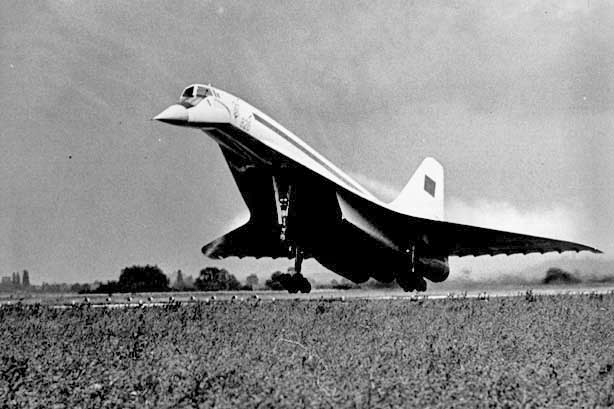
The Tu-144
Just came across the amazing story of the Tupolev Tu-144. One of the biggest engineering disasters I have read about!
Wednesday, August 10, 2011
Boredom and Creativity
Monday, August 8, 2011
Values, a luxury not a choice
A couple of weeks back I was trying to go home from work around 8pm and it was raining like crazy. It took me a whole hour to find a cabbie who would agree to take me home. I kid you not, a full 60 minutes – during which I walked all across Nariman Point and even reached Churchgate, fully drenched despite the umbrella. People who have lived in Mumbai can appreciate how hard it gets to find a cab when its raining. When I finally did find a cab, I promptly began venting about how Mumbai cabbies act like crooks when it comes to taking on passengers, especially when its raining (FYI, the law states that a cabbie cannot refuse a passenger irrespective of where he/she wants to go). I was righteously indignant, but he said something that shut me up. He said,
“Sir, rules are rules, but a man has to look out for himself. If I try to be a sincere guy and take you home to Wadala when its pelting, I will probably not find another customer there for hours. I still have to pay a flat Rs. 400 to my seth for a 12 hour shift because I don't own the car. But you will not pay me a paisa more than the meter fare, will you?”
“Or, fording through waterlogged roads, maybe my rundown old cab will break down. Will you walk away unconcerned, or will you try and help me get it repaired? Or do you think there is a government department or an insurance company who will help me out if my car breaks down in the rains?”
“On a more elementary level, every day of my life is spent trying to scrounge out as much money as possible. There is a wife and kids and parents and siblings all waiting back home for me to earn some money so that they can live. Sure I would like to be the ideal cabbie who is honest and upright and stands up to his customers – who wouldn’t – but do I have the luxury of putting values ahead of money? “
It was compelling logic. If you put values ahead of selfish gains, your kids wont be able to afford even a half-baked education back in the village. If you die or something unfortunate befalls you, no government will give a damn for your family. It’s a wild wild world, and each man has to look out for himself.
And that is a large part of the problem we face in countries like India. Too many people are running their lives six feet from the edge, desperately trying to make a life out of the deal fate has handed them. Can you or I afford to lecture them on values? Sure there is rapid economic growth. But that is far too often distorting the wealth equation than resolving socio-economic issues for the unfortunate millions. Having started from abject poverty, this country is rapidly morphing, and wealth is being created within the span of years, even months, instead of lifetimes. While millions watch from the sidelines, unable to participate. Those with half a chance – like the cabbies who rejected me – are racing as hard as they can trying to make ends meet. Perhaps the land of Gandhi does not have the luxury to value values in today’s circumstances.
Sure you might say everybody has a choice. And I am sure there are many in this great land who continue to uphold values above many other things in life. But I don't think you or I have the right to judge the rest very harshly.
PS: I have been thinking about Values a little bit lately. There are some interesting themes to cover in business values too. Will cover them soon.
Sunday, August 7, 2011
Letter from a Blackberry insider
Saturday, August 6, 2011
A trillion or two here and there...
Wednesday, July 27, 2011
Evangelism, and whats in a name
Tuesday, July 26, 2011
My thoughts take flight...


Sunday, July 10, 2011
Crowing away to glory
Sunday, June 26, 2011
Get out of my way!

Text below the comic: Now you won’t feel angry when the person behind you feels obliged to make you aware of the fact, that the light has turned green. This usually happens 534 microseconds after the change. Don’t feel rage. Feel sympathy for the guy.
Update: I have realized that for a peaceful, honk-free drive you do need a couple of factors to be in your favor. Most important being, you should not be getting late to reach someplace. Others may be person / situation specific?